The horseless carriage problem
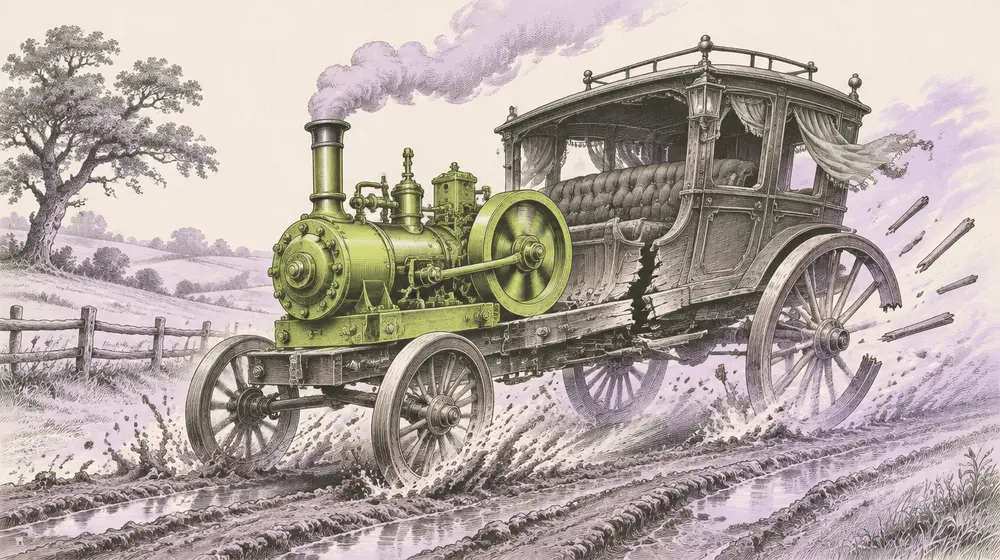
Here is a story I tell in every training room. In the 1890s someone took the horses off a carriage and bolted an engine where they had stood. They kept everything else. The wooden wheels, the bench, the brake lever, the roads made for hooves. A horseless carriage. Everyone was delighted. Same vehicle, faster, nothing to feed.
Then it started to shake itself to pieces. Wheels went. Frames cracked. The roads turned to mud under the speed. It took about thirty years for people to design the car around the engine instead: suspension, rubber tyres, a steel body, tarmac. The engine, it turned out, had been the easy bit.
I think about this every time I watch an organisation adopt AI. They keep the workflow, the job descriptions, the sign-off chain and the metrics, and bolt a chatbot on the front. Drafts get faster. Reports get faster. For a few months it feels like the future. Then the same people produce the same things in the same order, and when the finance director asks what moved, nobody can point at anything.
MIT looked at this in July 2025. Of the organisations in its preliminary study, 95% had seen no measurable return from generative AI. The authors did not blame the models. They blamed the way the tools were put in: workflows that never changed, systems that never learned, pilots that never touched the real work. One more number from the same study stayed with me. Workers at over 90% of the companies were already using personal AI tools for their jobs, and only four in ten companies had bought one officially. The staff had found the engine. Management was still discussing the horse.
I have trained hundreds of people now, at a UK fintech and an MP's office in Westminster among others, and the room is the same every time. The tools take an afternoon. The arguments take weeks.
- Who checks this before it goes out?
- What never goes into a chatbot?
- Is it honest to send an email a machine wrote?
None of those are questions about technology. They are questions about jobs, and nobody has answered them because the org chart still says what it said in 2019.
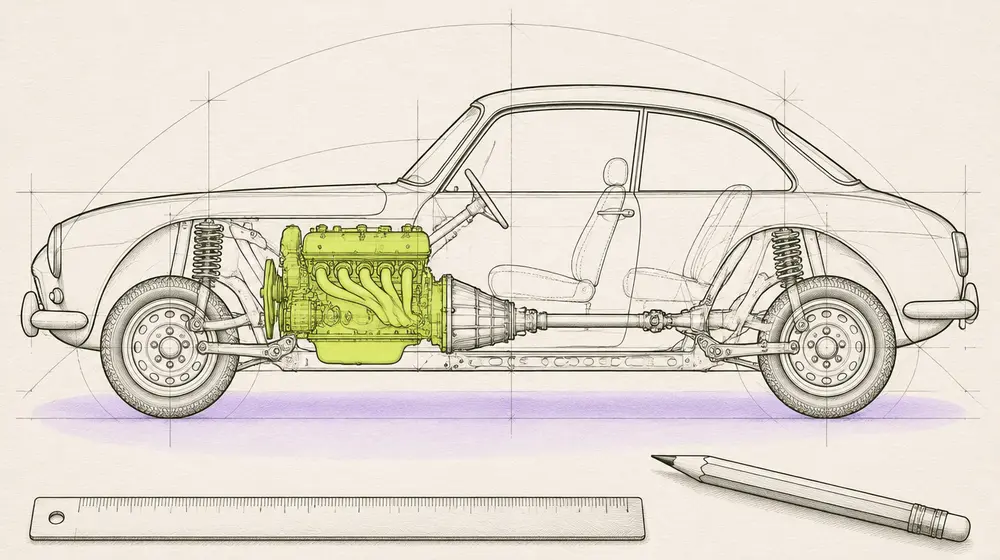
So I start there. Before any training, we map the organisation as it actually runs: who does what, where the work gets stuck, what gets measured. Then we draw how the roles and the rules change with AI in the building. Only after that does anyone open a tool. It lands differently when people already know what their job is turning into.
When drafts are free, judgement is the job. So before you buy another tool, settle three things: who does what now, who checks what before it leaves the building, and what never goes into a chatbot. That is the vehicle. The engine was never the hard part. If you want a hand redrawing yours, talk to me.
Talk to me about your organisation
A few lines on where you are is plenty. I reply within two working days.
Back to AI